
The spine of an HR group. Five years and three acquisitions later, it still is.
Overview
What we did
Brand Platform
Visual Identity
Verbal Identity
Web Design
Web Build
Motion Graphics
Copywriting
Ciphr is the go-to HR, payroll and benefits software partner for medium and large UK organisations. When we started working with them, they were a single-product HR business with a brand that didn’t reflect the company they were already becoming.
We rebuilt the brand around a single strategic idea – Amplify HR – and built a system designed to flex. In the years since, Ciphr has been backed by ECI Partners, made three acquisitions, launched an AI joint venture, more than doubled its customer base and won Tech Employer of the Year.
The brand we delivered is still the brand the group operates from.
1,400+ organisations now served by the Ciphr group. From around 600 at the time of the rebrand.


Position
Ciphr’s problem wasn’t a bad brand. It was a brand built for a smaller company.
The platform had become genuinely sophisticated. The team – HR people from the board down to the sales floor – knew their market better than almost anyone. But the way Ciphr presented itself to that market was functional, generic, and easy to walk past in a category where buyers had a dozen lookalikes to choose from.
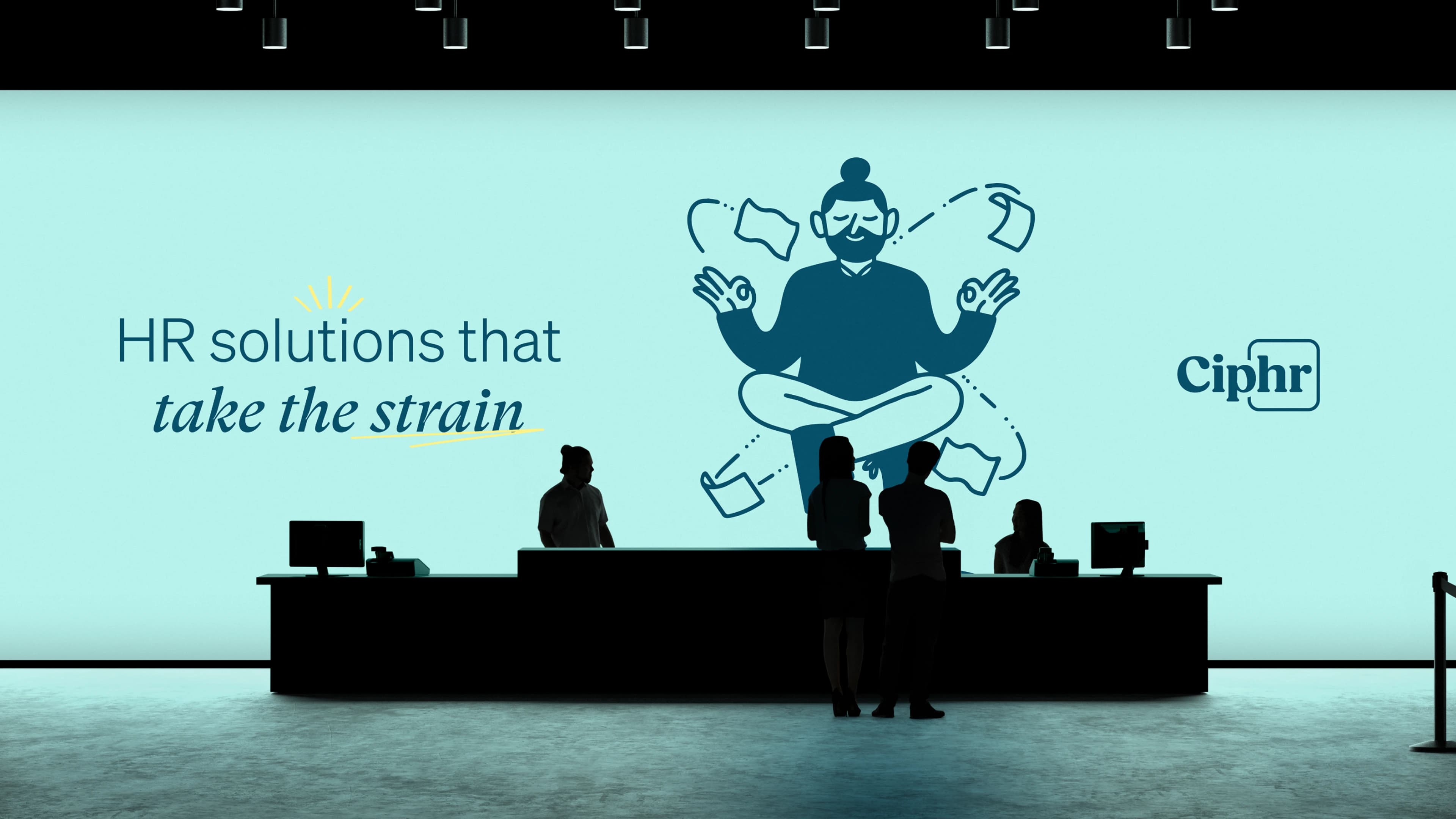
Our strategic work landed on Amplify HR. It captured something true about the company – Ciphr exists to make the HR function louder, more influential, more strategic inside the organisations it serves – and gave them a position that no other HR software business was credibly occupying. Not “people first” (everyone says that). Not “easy to use” (everyone says that too). A specific claim about what the product makes possible for the people who use it.
That positioning became the line everything else hung from.


System
The next move mattered more than the line.
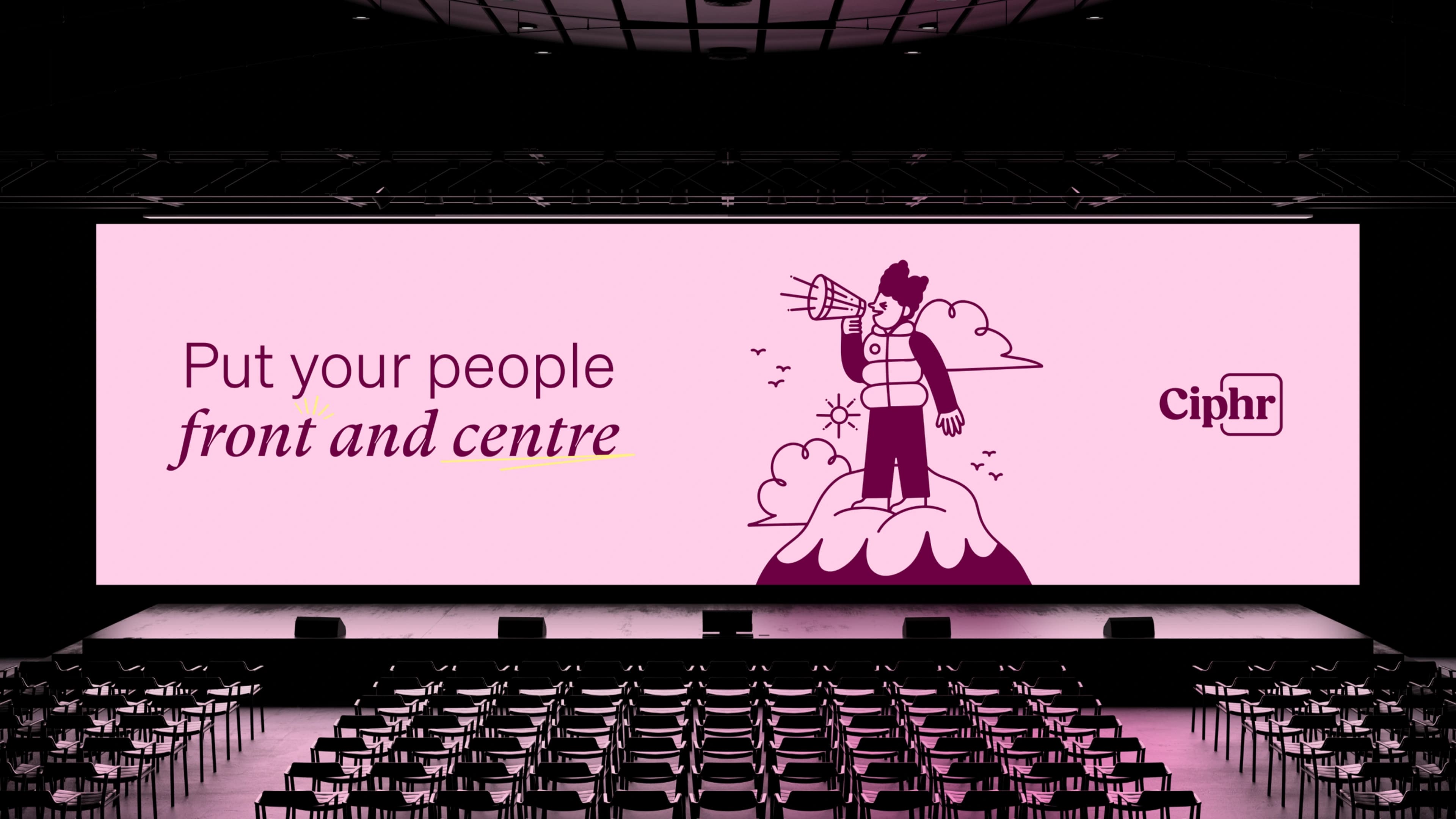
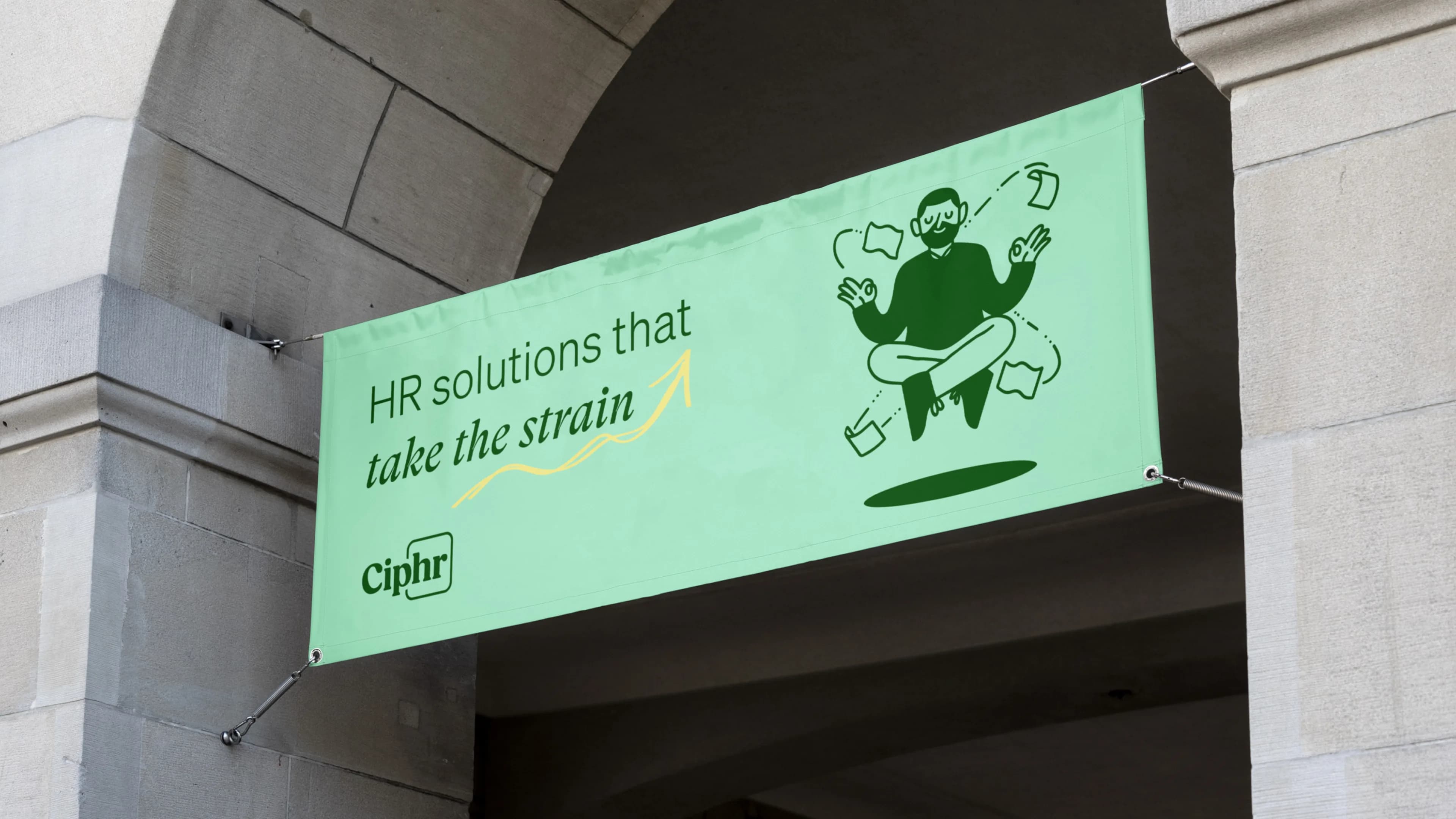
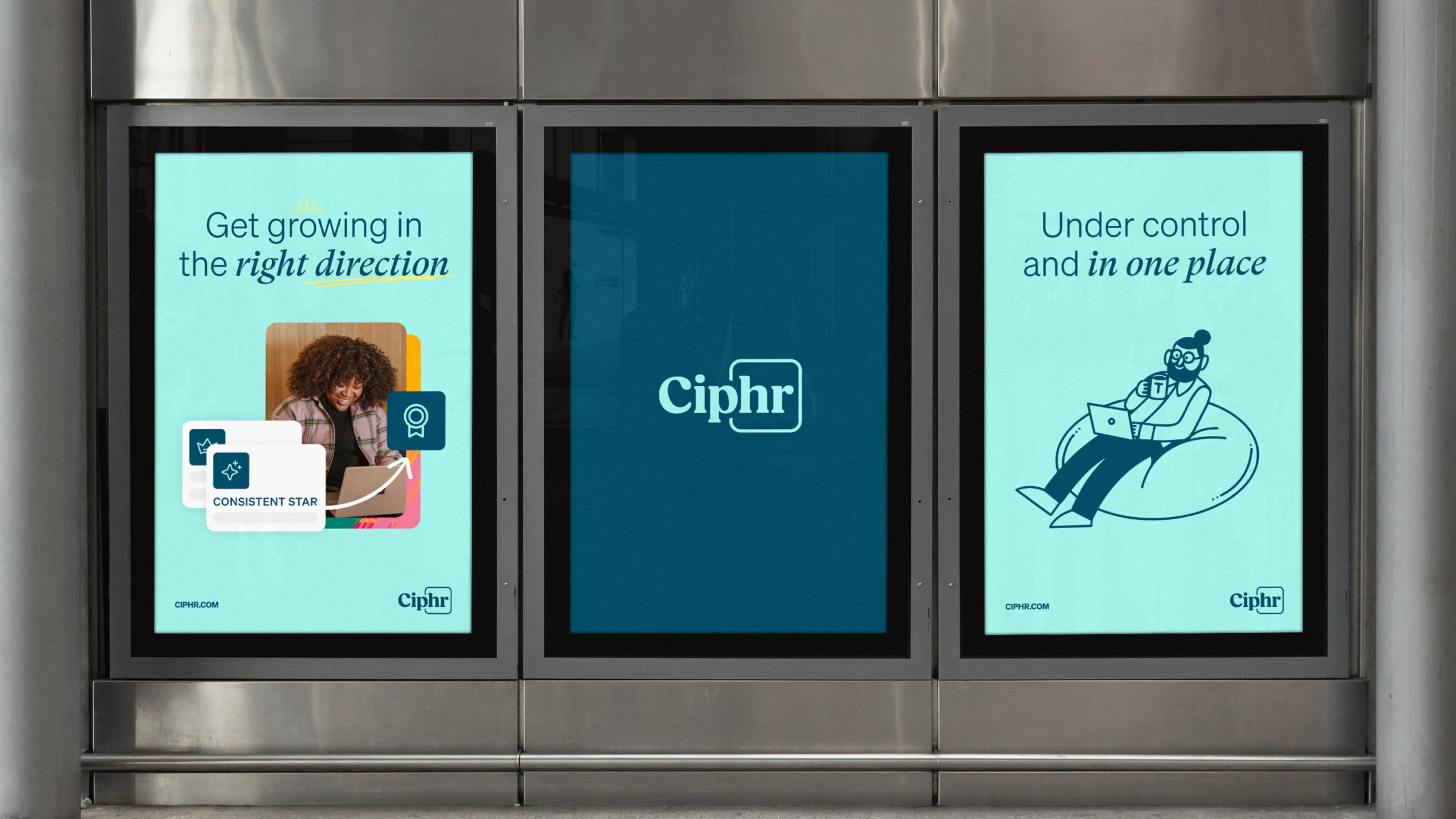
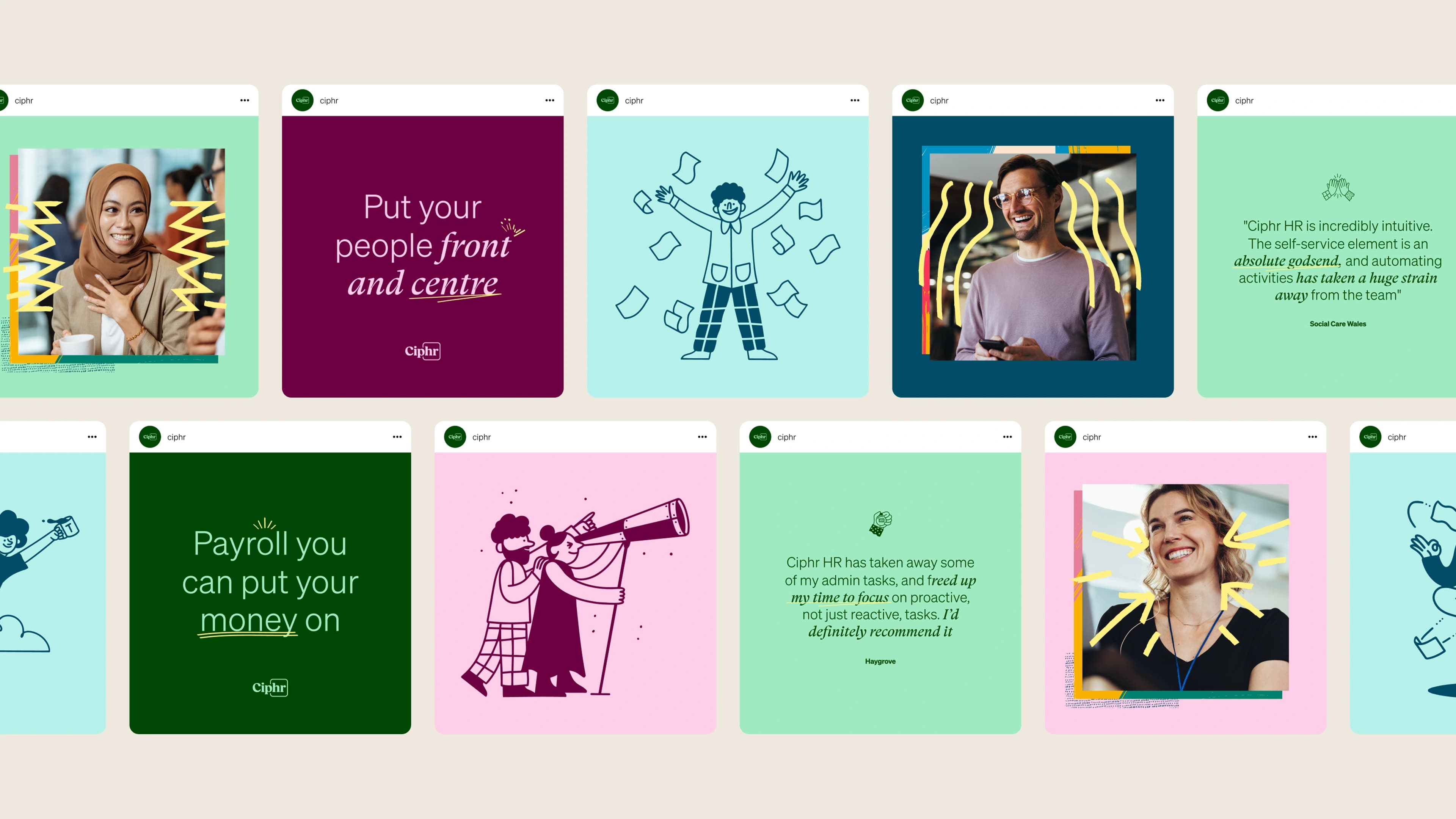
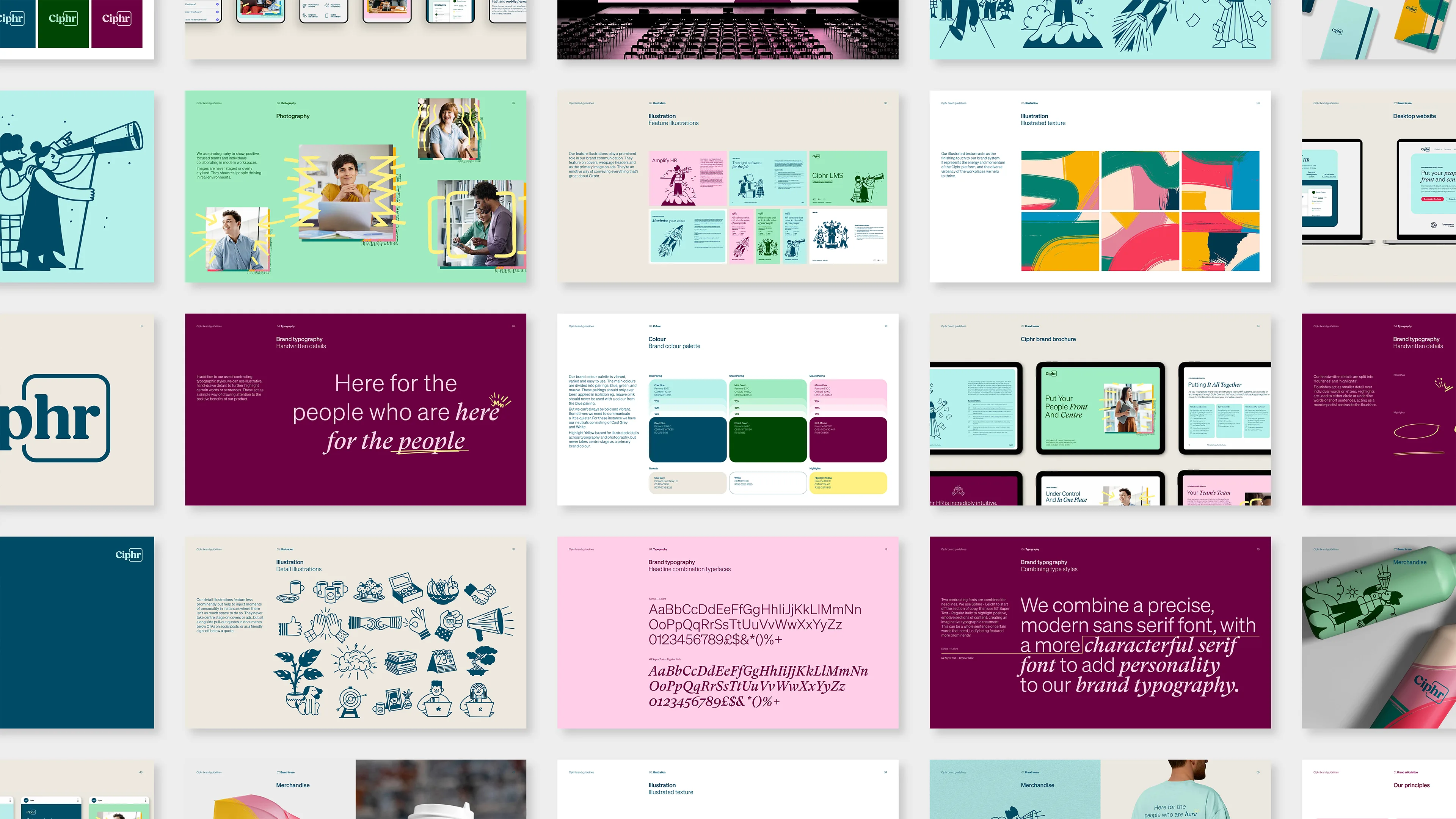
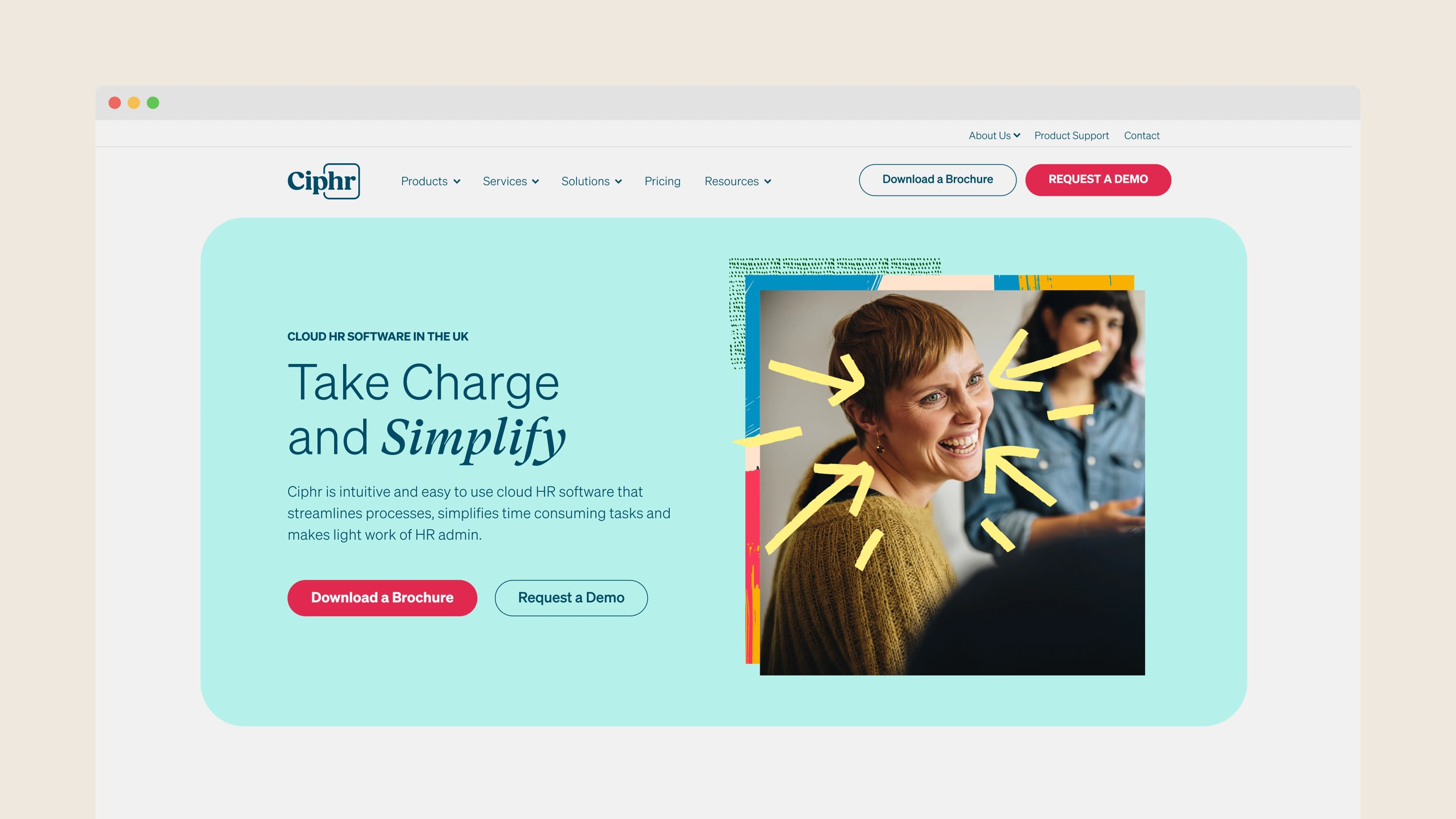
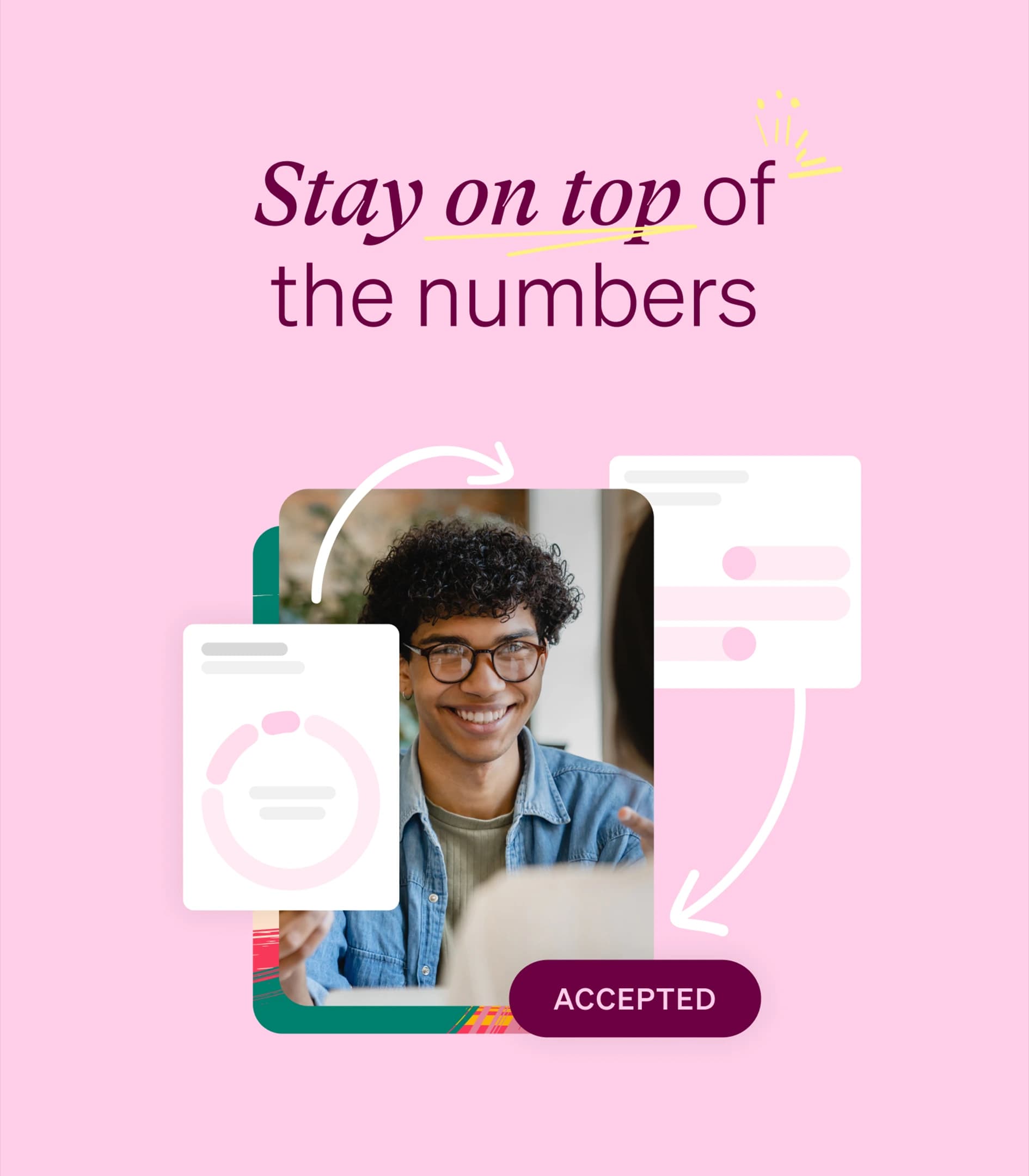
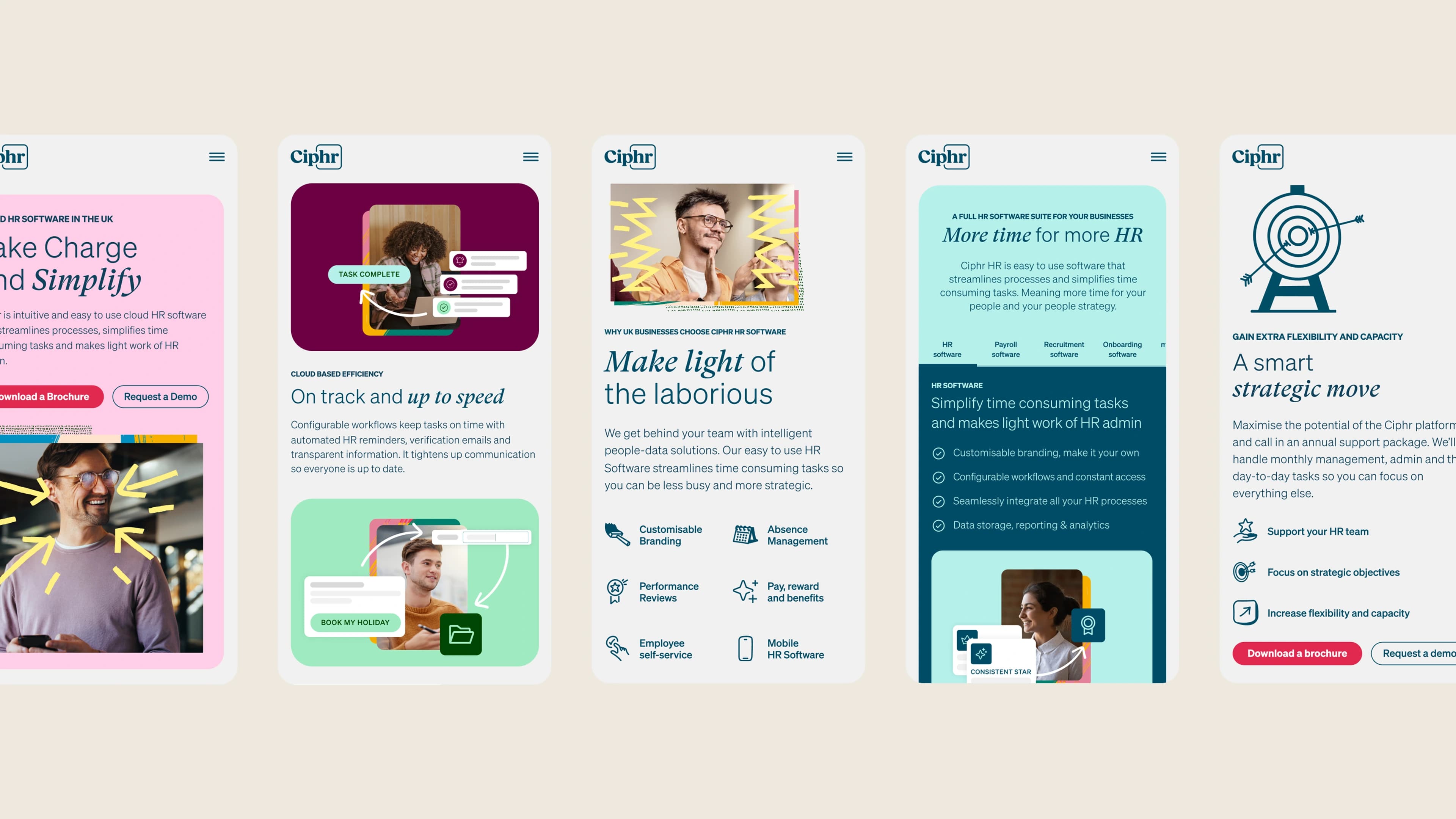
We built the identity as a system designed to flex. Rich base colours paired with energetic highlights. A mix of texture, pattern, photography and bespoke illustration. Typography that combined personality with the trust an enterprise SaaS product needs. The voice did the same job: confident but warm, an ambitious leader and a critical friend, capable of saying serious things without sounding cold.
The deliberate choice was breadth. Most identity systems are built to look consistent. This one was built to behave consistently across a much wider range of contexts than the company needed at launch – because we knew it would need to.
That instinct paid off. The brand has since absorbed three acquisitions, a joint venture, new product lines, a new CEO and a fundamental expansion of what Ciphr does – without ever losing coherence. Acquired businesses can sit inside the Ciphr group as products (Ciphr eLearning, Ciphr Payroll) or as sub-brands (Avantus, MyTeamBuilder) without the architecture buckling. That isn’t an accident. It’s what the system was designed for.



Compound
The work didn’t just hold. It compounded.
Five years on, Ciphr is materially a different business – and the brand is materially the same one. That’s the point.
What it set up
The brand we built is the brand the Ciphr group operates from today – across a customer base that has more than doubled, a sequence of post-acquisition integrations, and a wave of industry recognition.
1,400+
Organisations served (from ~600 pre-rebrand)
3
Acquisitions absorbed – Marshalls (2023), Shape Payroll (2024), Avantus (2024)
ECI
PE-backed growth following the rebrand
5 years
Brand still operating unchanged across the group
The brand didn’t grow Ciphr. The product, the leadership and ECI’s backing did that. What the brand did was give all of that growth a single coherent stage to play out on – and a system flexible enough to keep absorbing what came next.
Why this matters
Brand work that earns its keep doesn’t just look right at launch. It holds its shape through everything the business throws at it afterwards – new products, new acquisitions, new leadership, new markets.
Ciphr is the clearest example we have of a brand built as architecture rather than packaging. It’s the case for spending properly on brand at the start of a growth phase, because the alternative – rebuilding every time the business moves – is more expensive, slower and less compounding than getting it right once.
That’s what we mean when we say brand as infrastructure. Not a moment. A platform.
More
ContentCal
The UK social media management platform simplifying content planning, creation, and publishing in one tool.
Propstore
The world’s experts in film, television and pop culture artifacts, delivering high profile international auctions and online sales.
Findrs
A tech recruitment business with a very human core – bold, conversational, and built to sound like people, not a framework.